Natural Care for Animals Blog

Welcome the the Natural Care For Animals Blog!  We will be posting new articles, information and opinions that surround natural care for animals.

Also please don’t miss out on our Monthly Newsletter, by subscribing to it on the right! Ivana, will be sending out information about how to get our animals in tip top shape, and keep them there for years to come.

Why a Homeopathic Doctor?

Homeopathy1Of everything I could have chosen to be when I grew up, why a Homeopathic doctor?
Since I could draw pictures under my parents’ kitchen table with crayons or string a few words together as child I knew I loved animals and wanted to be a Veterinarian. Animals not only fascinated me but also got most of my compassion and some would say obsession. I have always found it very easy to understand animals. To know their needs and desires as well as to be able to feel their pain…funny what you learn when you just spend time observing them and not asking for anything in return. They really do talk in volumes for those that are ready to listen…

Even though I started my journey to be a traditional Veterinarian – even worked most of my young adulthood in the Veterinary field I couldn’t help but feel something was missing. Sure Veterinary medicine can be a wonderful tool with diagnostics and can really shine in emergency care but when it came to healing disease especially chronic deep seated stuff…I saw no cures I hoped to see…I saw lots of suppression of symptoms, lots of removal of body parts to stop the symptoms and pets being on drugs for the rest of their lives but no cures…something BIG was missing.

The understanding of disease and truly healing came from attending my Homeopathic Medical school. The answers I always searched for suddenly became available. Sure it took me at least 6 months to adjust to the new way of thinking about healing but it all made sense for the first time! And the best part of all…when properly practiced – Homeopathy WORKED beyond my wildest imagination. Conditions I learned in traditional veterinary medicine that were incurable had a chance with Homeopathy…because we were now supporting the body to heal itself!

Cases where I thought were too far gone showed me time and time again that no they weren’t – just the correct remedy and treatment hadn’t been given for the body to respond to. Yes, there are cases that are too far gone sometimes…but honestly I think most of the time it is due to the poor animals being assaulted with so much damage (vaccines, poor kibbled processed foods, GMO’s, pesticides etc.) for a very long time that they just don’t have enough capacity to do it anymore. These cases keep my up at night. Because there are times when even the life-less and too-far gone still respond to the right remedy. This is why I love Homeopathy.

It has the capacity to heal infections, inflammations, tumours (benign and cancerous), to detox the body, to balance hormones, to allow body to absorb nutrients even to right the mind. In Homeopathy no case is the same. You see we pick a remedy based on symptoms very individual to the patient. If I get a horse for Laminitis or a dog for Arthritis – we will literally have dozens if not hundreds of remedies that fit under these umbrellas. The key is to find the one that matches my patient. Not always easy as much cooperation must be had with the pet’s guardian to give symptoms, remedies and report changes of the pet sometimes hourly when needed especially when administering remedies for critical acute situations.

Homeopathy is harder to learn in my mind than some aspects of traditional medicine. Because there are hundreds of homeopathic remedies and you have to find the one that matches your patient. No case is the same. You are always presented with something unique. I am challenged daily but I’m also in awe every day of my life as well. I am so thankful for having the privilege to practice a form of medicine that has withstood the test of time for over 200 years. It is gentle (no side-effects) yet POWERFUL…and I strongly believe if it was embraced once again into the medical universities and hospitals like it used to (before greed and corruption weeded it out)…we’d have a much different world to look at.

If Homeopathy would be an equal or dare I say predominant medical modality for both people and animals today…we would not have the massive number of diseased and suffering animals we have today…that I believe with my whole heart!
power of vaccination?

“The protective power of vaccination is due to a diseased state of the body” M.L.Tyler. In Homeopathic teaching we learn that for the most part the reason a vaccine appears to work is because it makes the patient so sick it can no longer react to the contagion we are vaccinating for (body can only deal with one type of diseased state of same intensity and origin at a time). If we really think about it for a moment. If we were to inject a live virus for example like Rabies into a cat, dog or horse. And that animal gets inundated with that virus, heavy metals contained within it (Mercury, Aluminum), formaldehyde, other unknown viruses, fetal and other animal specie tissues etc. it can be pretty busy trying to protect itself. Yes we may get an immune system response (fever, localized swelling and so on) but what we also get is chaos. The body goes into over-drive trying to remove the foreign materials…and to fight this live virus that is now inside the body. Sometimes the body and immune system is strong enough (this is why not all animals or people drop at every injection)…but with the weak animals we now have a BIG problem. Imagine your pet is already immune system compromised somehow…has a few mild allergies (nothing mild about allergies by the way…just means immune system is pretty well broken). Even lowered immune function due to an upset tummy, bad diet, diarrhea…this spells big trouble when we are vaccinating.

For some animals in a weakened state ONE vaccine can mean chronic disease for others it takes multiple ones year in and year out. One never knows how and when the pet will react. But the one thing I can tell you is they all react in some way. Vaccinosis (vaccine induced chronic disease) can rear its ugly head in various forms. Depending on what organ your pet has weakness in that is where it can show up but main thing that keeps occurring especially with multiple vaccines is we create confusion in the immune system and push it into over-drive – we create auto-immune diseases. The idea of vaccines is not a bad one…and to some extent yes it has “protected” against acute infections/diseases….BUT let’s be very clear it is at a cost. We are perhaps preventing an acute disease BUT WE ARE REPLACING IT WITH CHRONIC DISEASE caused directly by the vaccine itself…

By law in most parts of North America and some parts of the world Rabies vaccine is mandatory. When I went to work in Vet Clinics and Vet school it was a requirement to get the Rabies vaccine for people working around the animals…so I had to get it done (this was before I knew about side-effects). I got sick by the first of the set of three. And by the second couldn’t handle the third. Doctor still insisted even though I was reacting badly. Imagine our animals getting it done YEARLY and not just one but multiple. Never in nature would they come in contact with a rabid animal that bit them more than once every year…or come in contact with tons of other diseases we vaccinate against all in one minute…we must be responsible pet owners and ask lots of questions. One of the main questions to ask is…is my pet healthy enough to get vaccinated? And if he or she is healthy than only ONE should suffice.

The main thing I’d like to impart is PLEASE DO YOUR RESEARCH! Look up side-effects. ASK TO READ THE INSERT LABEL THAT COMES WITH THE VACCINATIONS…take it home first and study it. Then if you feel like you are making an informed decision for your pet and know the risks involved then is it safe to proceed with caution.

Vaccines have become so commonplace that we don’t question or research but just blindly trust. Do NOT trust anyone explicitly. Follow your instincts and read everything you can get your hands on. I read articles and research papers written by doctors, scientists both for and against vaccinations – why? So I have a balanced view…and can challenge my views if the need arises. When I first started out in medicine I didn’t quite do that. I went in blindly…I read only medical journals and papers written by ONE side – yes I was well versed but by one side of the coin…when I started to see bad reactions in animals at the Vet Clinic and in my own home with my animals I started to ask questions…and thus the journey began for me and still continues…

Don’t make a decision based on one person’s views or one doctor, one article…but on several and from LOTS of various sources. An open mind is where we leave room to find the truth.

Do I blanket my horses

Do I blanket my horses? Should you?

1219090826This question doesn’t have a simple yes or no answer as each individual horse and turn-out situation is different and as a result it needs to be taken on a case by case basis.
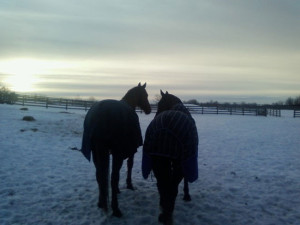
Firstly I believe to blanket ONLY when needed and ONLY when blankets can be properly taken on/off in a timely fashion (as weather/temps change sometimes this has to be done several times a day). I didn’t blanket my horses for many many years – they didn’t need it…but as some got older and started to feel the cold more a blanket became a welcome thing for them. Some of my horses get blankets others not at all…ultimately I think horses can self-regulate their body temps on their own best of all HOWEVER they MUST be given proper shelter and lots of free choice hay!

I’ve attached an article called Blanket my horse I’ve written a while back that goes into more detail on the subject to help anyone on the fence to decide.


Cribbing or Weaving Horse?

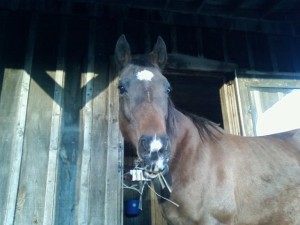
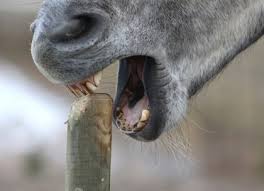
CribbingCribbing or weaving horse?  I have found that these vices are not behavioral at all…they are ALL linked to physical/mental/emotional pain and discomfort. 99% of the cribbing I see and treat are due to Gastrointestinal issues such as Ulcers. Weaving can also be a sign of ulcers.

Some horses will respond to full time 24/7 turn-out with hay available at all times WITH COMPANIONS. But most will need this to be treated as any other medical issue. Each situation is unique so each horse should be treated individually.

I often see cribbing collars put on horse that have severe stomach pains and now just can’t show you that they are hurting…I don’t like cribbing collars and don’t agree with them. We need to get to the root cause.

Also please remember Ulcers can be tricky to treat…and especially to diagnose. The ulcers may not be detectable through tests due to them being far down the GI tract…and drugs only suppress the issue and make it difficult for your horse to digest his food properly. There are natural solutions to cribbing, weaving and the problems that are underlying.
It is also very important to note. Some horses will get stressed when we keep taking their friends away. In boarding situations this can be very hard I realize but please be aware due to horses social bonding some will NEVER be able to tolerate being separated from friends when they are taken out to go riding or moved to another paddock or barn. Losing friends for some of these sensitive horses is devastating and the only way to make them happy is to give them a ‘permanent’ friend. A Mini horse is actually quite perfect for these situations as they don’t eat much and can keep your horse company for less money…

Remember ‘bad’ behaviors are only symptoms to something else…if you haven’t figured it out please keep trying as these small symptoms have a tendency to grow into bigger problems like Colic later on if not addressed.

Rat Poison

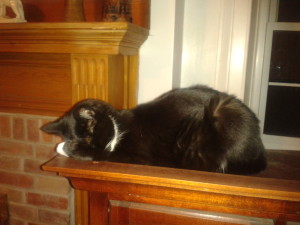
IMG00036This is a picture of our cat Skittles…about 4 + years ago when he mysteriously got very sick…Skittles ate a mouse laced with rat poison. We had moved into a new home and thought we had cleared out the poison left behind by the previous people. Sadly – some was left in the basement hidden that we didn’t find til much later. The poison got to the mouse residents and our cats caught and ate them. The rat poison is a new kind of poison that kills over a few weeks…so finding out the actual cause was very difficult at first. Blood work confirmed rat poison – problem was there was so much internal bleeding and damage that the Emergency Vet suggested we euthanize Skittles right away. When they tried to take a blood sample – all they got was pink watered down liquid – he was literally bleeding to death internally – the poison was taking our sweet cat. I didn’t want him to suffer but I also now knew what was happening…we had a diagnosis. 2012-10-05 21.27.30I decided to use Homeopathy to try and treat him. He was VERY weak. Skittles didn’t eat, drink, groom or move. He was very thin and looked well…looked like he was going do die sadly at any moment. I started him on Pesticide detox – I had to dose him every hour well into the night. But he started to show signs of improvement. It took a lot of effort and times where we thought he wouldn’t make it but I never gave up on him. I fed him and offered water every hour and gave his Homeopathic remedy just as often. He pulled through and made a miraculous recovery. He didn’t come unscathed however as the poisoning had been very bad…and damaged his kidneys so he’d occasionally need Homeopathy to keep him good but he always bounced back. He went at least a couple of years after the poisoning…put on weight and enjoyed his days outside…unfortunately one morning when he wandered off a bit more out of sight…a coyote caught him and took him away from us. He didn’t make it. We were devastated that after he had been through so much we still lost him but at least he got to enjoy his last few years pain free and doing what he loved most…going outside in the garden. I bring this story up because I know how many people use rodent poison regularly…and I just want to say please don’t. The stuff causes so much damage and suffering. NO animal deserves to die this way…no mouse, or rat…no one. Sadly many of our pets end up eating these horrible products by accident or second hand through a poisoned animal. If you have any of these products in your home please dispose of them safely. Do not use them.
And talk with your neighbors if you can as well – because poisoned mice die slowly and can come on your property!

Pesticides cause so much harm in so many different forms. We must choose to not buy them at all – that is the only way they will stop being sold.

You see the worst part of all…is that our pets eat/absorb pesticides on a daily basis (in their food/flea/heartworm treatments) – the poisoning is much slower but it happens nonetheless. Unless we choose to feed organic as much as possible…and give our animals a good detox regularly to support proper liver/kidney function we may see them suffer too just later on. We won’t see a world that has no pesticides any time soon but we can become very aware of what they do to our companion animals and we can make better choices for them…

Dangerous Myths About Pet Care

MythSome dangerous myths about Pet Care…

  • MYTH…Vaccine side-effects and bad reactions are rare! I don’t have the stats for this because they wouldn’t be very accurate anyways but I can tell you from being in the pet medical industry for over 20 years that bad reactions to vaccines are extremely under-reported. In fact they say that bad reactions get reported only 1% of the time. Sadly, out of this ONLY acute immediate reactions are noted…NO chronic effects are – as the Vets do not see a connection. However a connection does exist and has been coined as ‘Vaccinosis’ since the late 1800’s. A chronic disease state caused by vaccines. I’d say in my practice 90% of the animals I treat have Vaccinosis. Auto-immune diseases and increased cancers are one of the worst ones to come of this…
  • MYTH…Processed kibbled/canned food for cats and dogs and pelleted feed for horses is better than whole foods! This is such an injustice we have done to our companion animals. We’ve essentially given them our equivalent of meal-replacement power bars and junk foods and called it complete nutrition. Animals NEED REAL WHOLE FOODS. The stuff we are trying to pass off as nutritious food is what is a major contributor to making our animals sick.
  • MYTH…Pesticides wash away and degrade after use and pose no real danger. The chemical pesticides that are lacing ALL our pets foods right now are destroying and changing their hormones, blocking absorption of nutrients, creating deficiencies, stopping our pets from being able to detoxify, taxing their bodies and burdening and sickening their livers and kidneys…the amounts cats, dogs and horses are exposed to are astounding. There is NOTHING safe about pesticides…
  • MYTH…GMO crops are equal to regular organic ones…this is one of the biggest lies we’ve been told. There is such a huge difference in the GMO crops that we can’t even call them the same. GMO’s not only cause low grade inflammation in the body but create allergies, nutritional deficiencies and are toxic (linked to cancers). Corn for example has been genetically mutated so much it actually is missing some nutrients – so much so that it weighs less than its organic counterpart. These foods are present in 99% of your cat, dog and horse food. This alone should be reason to switch to organic whole food sources…
  • MYTH…Flea and Heartworm preventives as well as chemical dewormers are very safe. Sorry not according to my experiences. I see at least a few patients daily that have had bad experiences with these products…sadly most don’t make the connection because they are told they are safe and that it can not be possible. Well it is very possible and it does pose a risk. I often hear from people telling me that they’ve used this product on their pet for years with no problems and therefore it must be safe. Firstly, this is only their ONE experience…I get to see hundreds and they are mostly not good experiences. Secondly, that pet that has kidney failure IS REACTING TO THE PESTICIDES FOUND IN THESE PRODUCTS they just don’t know that’s what it is. So sadly…when someone tells me that the chemical wormer is safe, or the heartworm or flea preventive has never caused a bad reaction – I always ask them about the state of health of their pet in general. Haven’t found ONE yet that didn’t have chronic health issues.

The problem is most of the above is cumulative…combined poisons make for complex health problems that are rarely connected to each other. We have to remember something VERY important.When a company researches side-effects to their ONE product…they NEVER take into account how their product will react in the real world when combined with several hundred toxins and chemicals. This is a massive issues we all have to be aware of and we need to limit exposure to as many of these things as possible because we will never know our pets limit. One day they will just get sick and which will you know is the culprit? The answer is all of them…

Safe Herbs for Horses Paddock

1117091618What safe herbs for horses paddock can I plant or can be around the horses? Well there’s literally TONS of wonderful plants, herbs and weeds you can plant or encourage to grow near your horses for them to nibble on…here’s a partial list of safe ones.
– Chamomile and Wild Chamomile
– Cedar trees
– Chenopodium (Lamb’s Quarters)
– Goldenrod
– Burdock
– Dandelions
– Couch Grass
– Sage
– Thyme
– Basil
– Rosemary
– Echinacea
– Fenugreek
– Hawthorn trees
– Thistles (different varieties)
– Stinging Nettles
– Mint
– Raspberry bushes
– Blueberry bushes
– Red Clover
– Yarrow
– Comfrey
– Oregano

This is just a small list…please remember though…if you have a small paddock with hardly any grass and hay is limited horses MAY eat herbs or other plants in excess that they wouldn’t if their hunger and nutritional needs were met… so please always plant or feed any herbs with caution if your horse has any health problems or is on a limited diet as they may not be able to control themselves properly… otherwise providing VARIETY is key to a long, healthy life for your horse!

Round Bales for Horses Safely

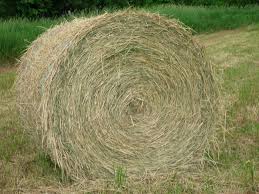
HayBaleHow to use Round Bales for horses safely!  I know a lot of people love round bales…yes they are convenient and usually cheaper. BUT they are often used incorrectly and cause more problems than they are worth IF used improperly…so should one use them or not? Well I believe YES definitely they can be but how they are used is critical.
So here’s some tips:

  • Round Bales go moldy easily when left outside for a long time. If you do not have enough horses to eat down a full round bale in 2-3 days either use small squares or see below for other options.
  • Get your Round Bale under a cover/shelter (also some Round Bale feeders come with an umbrella type top) – do not leave it out in the elements. Once rain gets on it even a sprinkling…or snow that melts it is good as done. The mold has begun…and is SPREADS fast throughout the whole bale!
  • MOLD GROWS EVEN IN COLD WINTER WEATHER JUST MORE SLOWLY! I often hear people say but I only use them in the winter time when there is no rain…no mold will grow — this is not so. Mold grows constantly – just faster in warmer/damp weather. It is the moisture content that makes it grow not so much the temperature.
  • “But my horse has no breathing issues I don’t have to worry” This is something I also hear often. And here’s my take on that. Your horses doesn’t have breathing issues YET…it may take years to develop or your horse may just have other problems associated with mold and mycotoxins like digestive disturbances/colic/immune system being compromised. So in my mind it is not worth it.
  • Buy a Round Bale and feed it in pieces. This is what I do. I purchase a round bale and take off layers – I put some in hay feeders/nets AND on the ground. This way there is less chance of my horses eating hay that is full of mold and dust. Horses love to bury their faces in the bales to find the ‘good’ pieces…breathing in dust/mold as they do. Also they can easily get stuff in their eyes. It is far better to distribute the hay as if it was from a small square.
  • Be careful of hay nets! As some of you know I’m not a big fan of hay nets (my reasons are a few and will be left for another post). Well the ones with very small openings that is… The bale lasts longer yes…but it also has more chances of getting full of mold unless it is in a barn or under a shelter of some sort. Also, we have to realize small opening hay nets make your horses eat less – but sometimes TOO little and too slow and the horse is starving. Horses in the wild take big bites and small bites…depending on what they are eating. A healthy horses doesn’t need a hay net they can self-regulate. A metabolic horse needs Homeopathic remedies, missing nutrients and detoxing…not a diet. So if you are using hay nets make sure the openings are big enough so your horse does get enough food throughout the day…AND that they bale is covered properly so that you aren’t growing mold under that net!

So, Round Bales are not bad..on the contrary – BUT they need to be used properly to minimize spoilage. I drive by so many farms – and more than 80% of them have BLACK round bales full of mold…doing the above steps will help keep your horse happy and healthier for it.

Overweight Animals

Overweight animals…  Many animals are unfortunately overweight and with it comes series of health issues but I’m also seeing a lot of people go the opposite direction with some of their animals…especially some raw food feeders believe that skinny is the new healthy. Yes we want our animals LEAN…muscular but not under-fed and skinny.
Just like it is not good for an animal to be too fat…too thin isn’t good either. Those animals end up burning their own muscles/protein for energy.
So here’s my take on it…
DSC01205

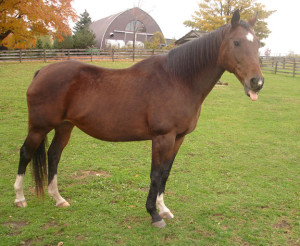
A healthy looking pet whether it’s a cat, dog or horse should look like this…

1. You should be able to slightly see or feel ribs (short haired animals you may see ribs UPON TURNING OR MOVEMENT, NOT long haired ones as there should be full coverage so ribs should only be felt.

1. There should be no visible vertebrae/spine or hip bone – some breeds are bred leaner like a Greyhound so there may be a bit more PARTIAL visibility of the spine but not much…if you can count the bones your pet is too skinny no matter what the breed!

2. There should be some tucking in of the abdomen – not sausage like – but more like an hour glass when you look from the top. Too much tucking of the abdomen isn’t good either…balance is key!

3. Loss of muscle – mass…I see this often where the pet is so thin that they start to later lose the muscle. Not a good sign.

So, healthy weight is important…too fat not good but neither is too skinny. Animals should be fed 2-3% of their body weight – if the animal needs more due to age, activity level or illness that should be adjusted.Animals are better off a bit leaner than too much over but it is a fine line.
Also it is important to note it is very NORMAL for their to be small weight fluctuations here and there dependent on activity, food supply, stress etc. However, if you notice a big change all of a sudden have a vet take a closer look at is could mean serious disease.

As for the horses…they should go into winter a bit plumper so they can stay warmer and use these reserves through out those cold days…